Best Building Block Sets for Adult Collectors: How to Choose
A practical guide for adult collectors choosing building block sets by subject, scale, display space, building experience, and long-term collection value.
Adult building block collectors often want more than a large piece count. The most satisfying set is usually one that matches a personal interest, fits the available display space, offers the right level of challenge, and still looks considered after the build is complete. A model can be technically impressive but inconvenient to display, or visually appealing but too repetitive for the builder who wants a deeper construction experience.
This guide explains how to compare building block sets as display objects and long-term collection pieces. You can also browse current JIESTAR building block categories to compare architecture, vehicles, trains, flowers, space models, and other themes.
Start with a Subject You Want to Keep
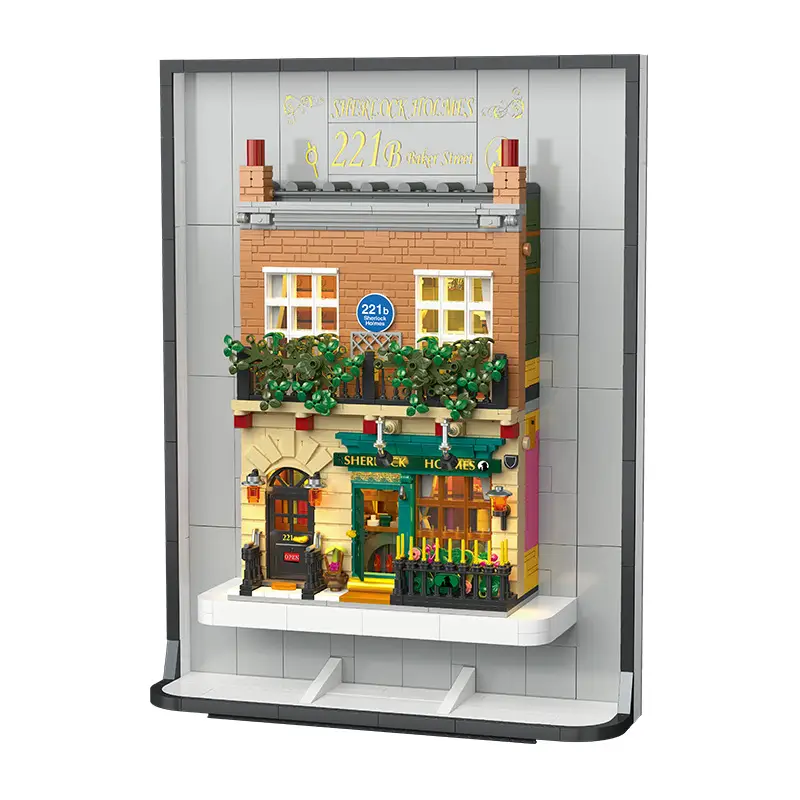
Collectors are more likely to finish and display a model when the subject already matters to them. Architecture sets can become part of a city shelf. Train models work well in transport collections. Vehicles may appeal to builders interested in bodywork, interiors, and mechanical details. Flowers and botanical models can fit living spaces where a conventional toy display would feel out of place.
Instead of starting with the largest set, choose a category that can support future additions. A focused shelf of trains, modular buildings, or display vehicles often feels more intentional than unrelated models selected only by piece count.
Compare Scale and Finished Dimensions
Product dimensions are just as important as the number of pieces. Two sets with similar piece counts can have very different footprints because one uses dense internal structures while another creates a long train, ship, or vehicle body.
Before ordering, measure the shelf, desk, or cabinet where the finished model will go. Leave room around the model so details remain visible and so the set can be moved without catching on nearby objects. For tall architecture or flower models, check vertical clearance. For vehicles and trains, check depth and length rather than looking only at height.
If the finished size is not listed, ask for product specifications before making a display plan. Clear dimensions are one of the practical signs covered in our guide to choosing high-quality building block sets.
Choose the Right Building Experience
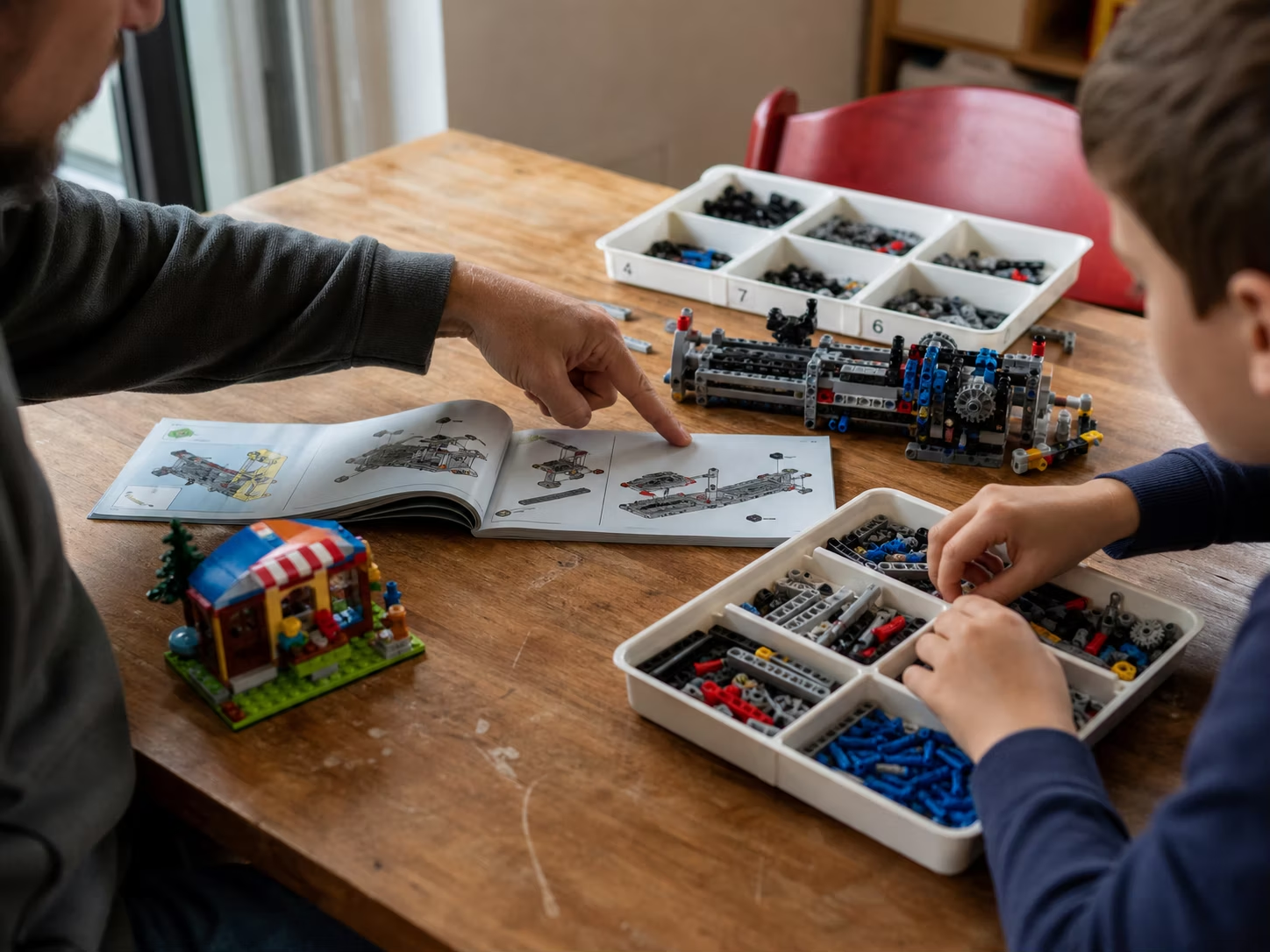
Collectors value different parts of the process. Some enjoy repeated architectural patterns and gradual vertical progress. Others prefer mechanical assemblies, unusual angles, layered body panels, or interior detail. Product images can show the result, but they do not always explain how the build feels.
Consider these questions:
- Do you want a relaxed build or a project that requires close attention?
- Do you enjoy structural repetition, mechanical connections, or decorative detail?
- Will the set be built in one session or across several days?
- Do you want moving features, opening sections, or a static display model?
- Is the instruction manual and parts organization clear enough for the intended difficulty?
Piece count can suggest time commitment, but it does not define difficulty by itself. Small parts, color similarity, internal structure, and the order of assembly can matter just as much.
Review the Model from More Than One Angle
A strong collector set should look resolved from the angles that will remain visible on the shelf. Review front, side, rear, and overhead images when they are available. Look for consistent proportions, intentional color blocking, and details that support the subject instead of making the model unnecessarily busy.
For a vehicle, check the side profile, wheel placement, cabin, and rear treatment. For a building, compare the facade with the side walls and roof. For a train or ship, review the full silhouette rather than judging only a close-up of one detailed section.
Think About Collection Compatibility
Compatibility is partly visual. Models displayed together do not need to use exactly the same scale, but they should share a reason for being together. That connection might be theme, color, historical period, product type, or simply the collector's own story.
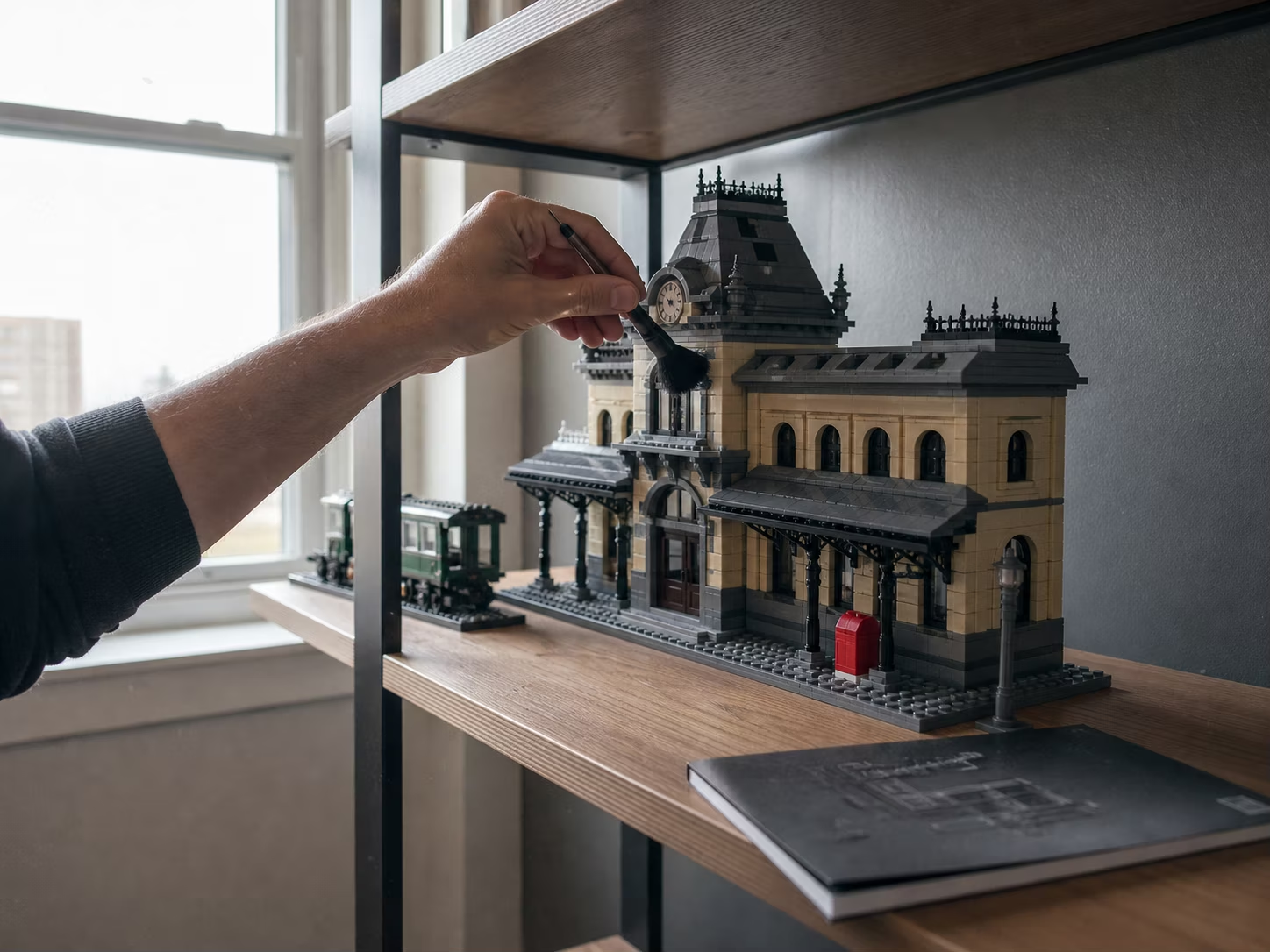
It is also useful to consider maintenance. Open models collect more dust than enclosed forms. Dark glossy pieces can show fingerprints. Wide models may require deeper shelving. Our guide to displaying and caring for building block models covers practical cleaning and storage decisions.
Check Support Before You Commit
Even experienced builders can encounter a missing or misplaced part. Before choosing a large project, check whether the brand provides a clear support route. JIESTAR offers a dedicated missing piece and replacement parts page where builders can prepare the product SKU, instruction step, and part information needed for review.
Keep the product box or record the SKU until the build is finished. Sorting leftover pieces separately also makes it easier to confirm whether a part is genuinely missing or was used in the wrong step.
Frequently Asked Questions
Are larger building block sets always better for collectors?
No. A smaller model with a strong subject, good proportions, and the right display footprint may be a better collection piece than a larger model that does not fit the space or the collector's interests.
What information should I check before buying?
Review the subject, piece count, recommended age, finished dimensions, product images, instruction expectations, and available after-sales support. If any key specification is missing, ask before ordering.
Where can I compare JIESTAR collector themes?
Start with the JIESTAR product catalog, then open the relevant category pages to compare architecture, trains, vehicles, flowers, space, and other display-oriented directions.
Explore JIESTAR
Browse building block sets or contact JIESTAR for wholesale supply, OEM / ODM customization, product co-development, and sub-brand partnerships.
Continue reading