How to Display and Care for Building Block Models
Practical advice for displaying, dusting, moving, and storing finished building block models without damaging parts or losing the details collectors value.
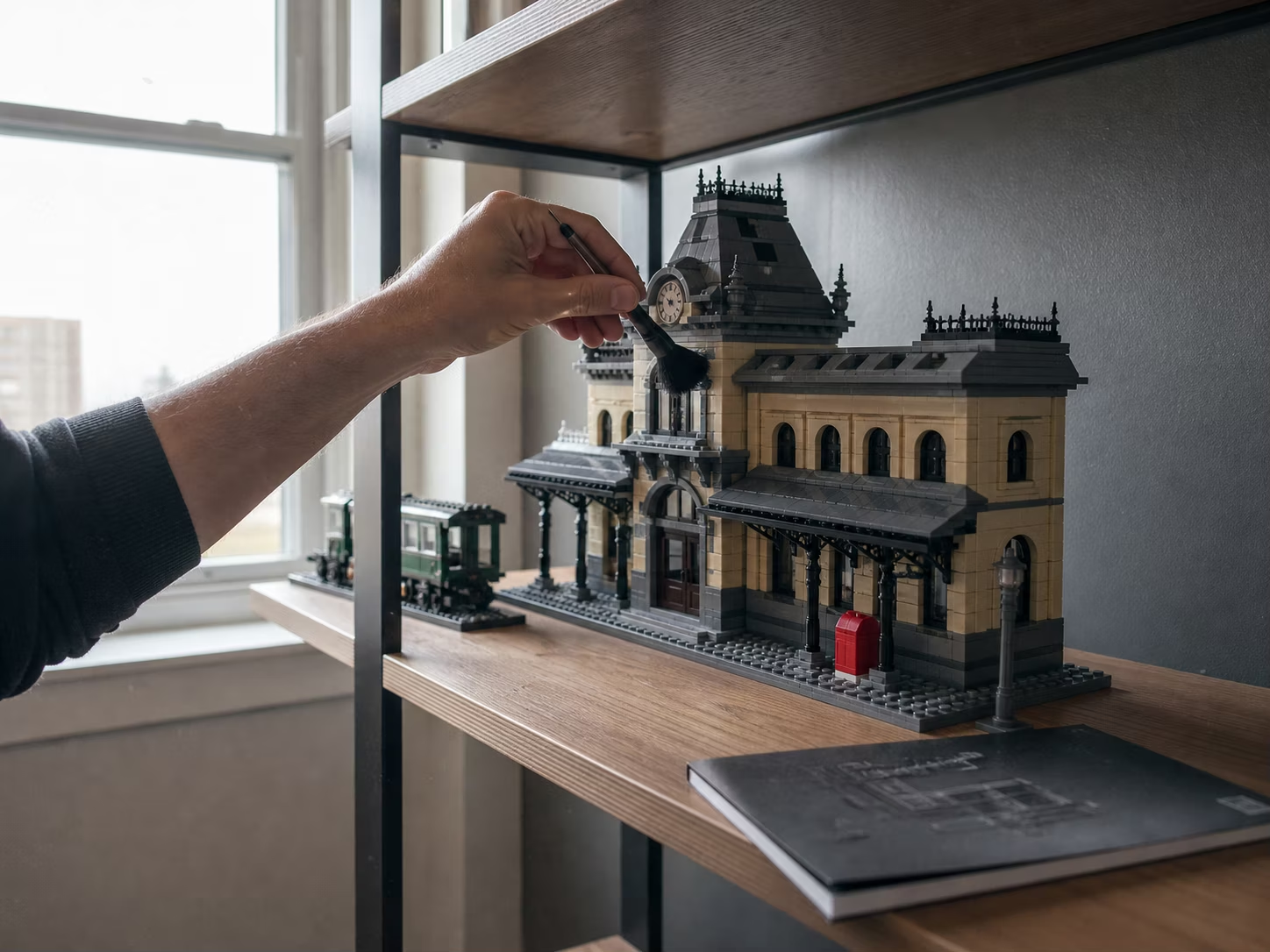
Finishing a building block model is only the first part of enjoying it. A well-planned display keeps the model visible, stable, and easier to maintain, while a poor location can expose it to dust, direct sunlight, accidental knocks, or pressure on delicate sections. The best approach depends on the model's size, shape, colors, and how often you want to handle it.
This guide covers simple care practices for collectors, families, and gift buyers. If you are still choosing a model, browse JIESTAR building block sets and check the finished dimensions before deciding where it will go.
Choose the Display Location Before Building
Large models are easier to place when the display space is prepared in advance. Measure the shelf width, depth, and height, then compare those measurements with the finished model size. Leave extra clearance for projecting wings, mirrors, masts, branches, or roof elements.
A stable shelf is more important than a decorative one. Avoid narrow ledges where part of the base hangs over the edge. Keep heavier models away from shelves that flex or wobble. If children or pets use the same room, a higher shelf or enclosed cabinet can reduce accidental contact.
Direct sunlight can warm the display area and may affect how colors appear over long periods. A position with stable indoor light is generally easier to manage. Avoid placing a model directly beside a radiator, cooking area, open window, or other source of heat, grease, or frequent moisture.
Use the Model's Shape to Plan the View
Not every model needs to face straight forward. Vehicles often look more dynamic at a slight angle. Modular buildings may need enough side visibility to show their depth. Trains, ships, and aircraft usually need longer sight lines so the silhouette is easy to read.
Place the largest model first, then arrange smaller pieces around it. Avoid crowding every available centimeter. Negative space helps the shape remain clear and makes dusting easier. If several products share one shelf, group them by theme, color, or approximate scale instead of filling gaps randomly.
For more help choosing models that fit a collection, see our guide to building block sets for adult collectors.
Dust Gently and Regularly
Light, regular cleaning is safer than waiting for a heavy layer of dust. Use a clean, soft brush for studs, recessed areas, grilles, and other detailed surfaces. A microfiber cloth can work on broad, smooth sections, but it should not catch on antennas, leaves, railings, or small decorative parts.
Work from the top of the model downward so loosened dust does not fall onto an area you have already cleaned. Support delicate sections with one hand while brushing with the other. Do not force the brush into a narrow assembly.
Avoid strong household cleaners unless the product instructions specifically support them. Spraying liquid directly onto an assembled model can move residue into gaps and may affect printed or stickered parts. If a part needs more attention, it is safer to remove it carefully and clean it separately with a minimally damp cloth, then dry it before rebuilding.
Move Models from the Strongest Structure
Before lifting a model, identify the main load-bearing base or frame. Do not lift a large building by its roof, a vehicle by a spoiler, or an aircraft by a wing tip. Use both hands and support the model from underneath whenever possible.
Clear the route before moving. Open cabinet doors, remove nearby objects, and decide where the model will be placed before lifting it. For long or complex models, temporarily remove fragile accessories and carry them separately.
If the model begins to flex, set it down and check the instructions for a safer separation point. Some builds can be moved in sections, while others depend on an internal frame that should remain connected.
Keep Instructions and Product Information
Store the instruction manual, product SKU, and any spare pieces together. A labeled resealable bag or small box makes future repairs easier. Digital photos taken after completion can also help if a section is accidentally disturbed later.
Do not mix spare pieces from many sets unless they are clearly labeled. When a small part comes loose months later, knowing which product it belongs to saves time. If you believe a required part was missing from the original package, use the JIESTAR replacement parts support page and provide the SKU and instruction step.
Store a Model Carefully When It Is Not Displayed
If a model must be stored, decide whether to keep it assembled or break it into manageable sections. Fully disassembling a large set takes time and requires careful sorting, but an assembled model needs a rigid box with enough clearance to protect projecting details.
Use smaller bags for removable sections and label them. Keep the instruction manual separate from loose parts so pages are not bent. Avoid placing heavy objects on top of a stored model, even if the outer box appears strong.
For long-term storage, choose a clean, dry indoor location with stable temperature. Before redisplay, inspect connection points and rebuild any section that shifted instead of pressing the whole model back into shape at once.
Frequently Asked Questions
How often should I dust a building block model?
There is no fixed schedule. Light cleaning whenever dust becomes visible is usually easier and safer than infrequent heavy cleaning. Enclosed cabinets generally reduce the frequency needed.
Can I wash a fully assembled model?
It is better to avoid soaking an assembled model, especially when it contains stickers, printed parts, internal mechanisms, or sections that hold water. Use gentle dry cleaning first and clean individual removable parts only when necessary.
What should I keep after completing the build?
Keep the instruction manual, SKU, product reference, spare pieces, and any notes about removable display sections. These items make maintenance and support much easier later.
Explore JIESTAR
Browse building block sets or contact JIESTAR for wholesale supply, OEM / ODM customization, product co-development, and sub-brand partnerships.
Continue reading