OEM vs ODM Building Blocks: Which Is Better for Your Brand?
Compare OEM and ODM building block projects by design responsibility, development scope, sample approval, quotation inputs, and product-line goals.
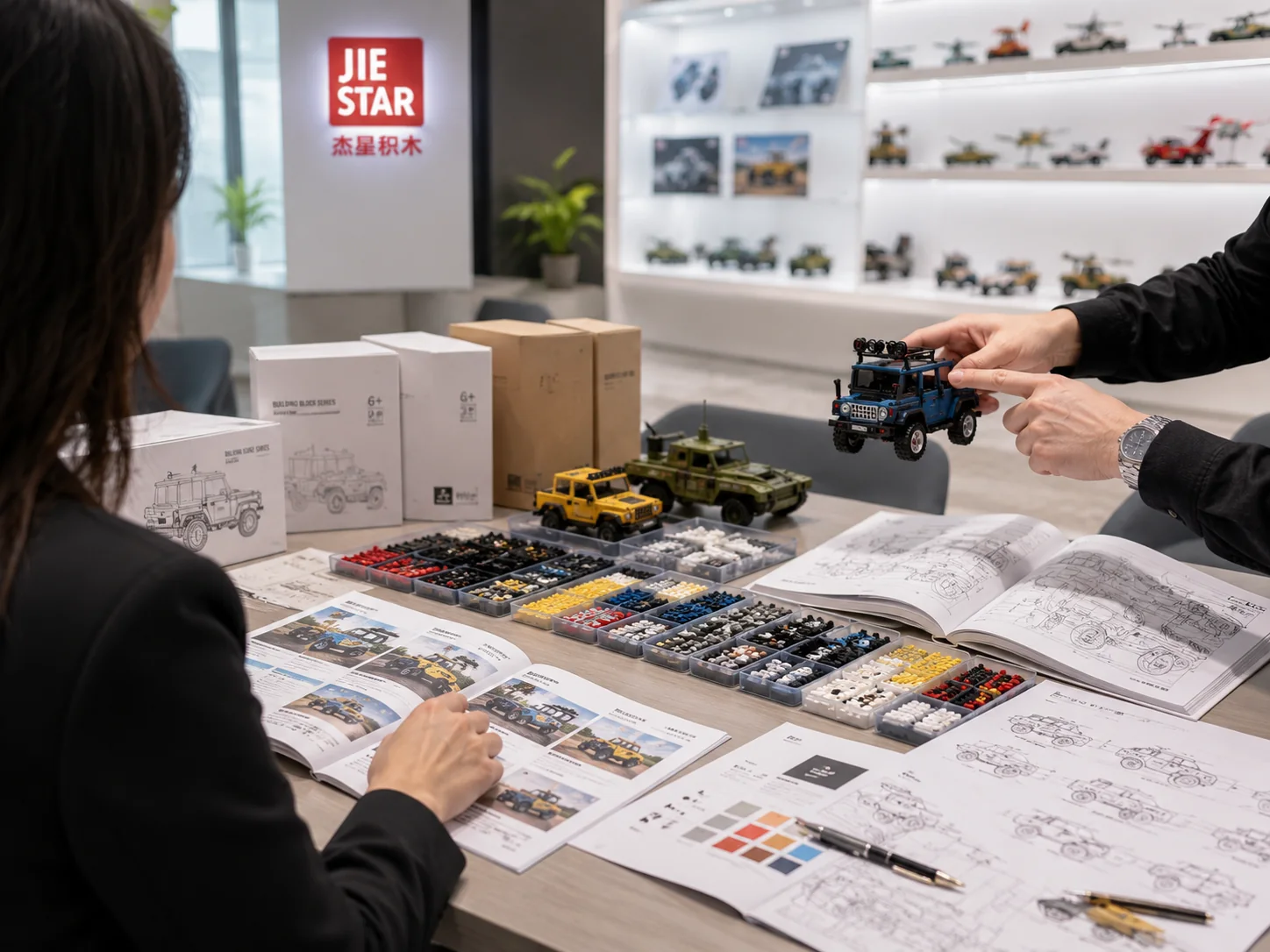
The useful distinction between OEM and ODM building block projects is who supplies the design and what development work remains. Start by describing the model, its current design stage and the work you need from the manufacturer. The project label alone cannot establish cost, timing or ownership arrangements.
For JIESTAR inquiries, bring a defined design for OEM review or discuss a product direction that needs development through ODM. Packaging and branding can accompany either route, but they should be listed as separate deliverables.
OEM: Bring a Defined Design for Manufacturing Review
An OEM brief should explain what is already designed and which files or samples are available for assessment. Identify the model version, instructions, parts requirements and packaging work that are complete, along with the elements still open to adjustment.
A defined design still needs a feasibility review. Ask how the proposed model, assembly instructions, sample checks and production specification will be evaluated. Make clear whether suggested changes require your approval before proceeding.
If you only need a catalog product with different packaging, describe that scope directly. It may be a private label packaging discussion rather than a full model-development brief.
ODM: Define the Product Direction and Development Work
An ODM inquiry can start with the audience, theme, intended building experience and visual references. Explain the result you want and which design tasks you expect JIESTAR to help develop, such as model structure, color direction, instructions or a coordinated range.
Separate required features from preferences. A reference image can explain a desired style or display format, but it does not resolve feasibility, permission to use a design or the finished specification. If your project requires a licensed subject or third-party artwork, identify the materials you are authorized to use during the scope discussion.
Choose by What You Already Have
You have a design and need production review
Start with the available design files, a sample if available and a list of unresolved details. Ask for a review of the defined design and identify any adaptation work separately in the proposal.
You have a concept and need model development
Start with a concept brief, audience, preferred size range, intended functions and budget direction. Ask what information is needed to assess development, sampling and the proposed production scope.
You have selected catalog products and need branding
Send the product links and the precise packaging, logo or language changes you want. Use the custom packaging guide to prepare the artwork brief. Avoid adding model development to a packaging-only request unless the product needs to change.
These examples are planning routes, not customer cases or quoted project outcomes.
Agree Design and Approval Responsibilities
Before development proceeds, ask the proposal to identify who supplies and approves each deliverable:
- Model design and any requested structural changes
- Parts selection, color references and printed-part artwork where applicable
- Building instructions and language versions
- Retail packaging artwork and physical packing specification
- Sample review criteria, revision process and approval contact
- Final version references used for production and later repeat orders
Discuss any proposed exclusive SKU, design-file access or reuse arrangements explicitly. The terms OEM and ODM do not substitute for a written project scope. For a broader range, explain your product-line cooperation goals.
Request a Quote for the Agreed Scope
Provide the estimated quantity per SKU, target market, price direction, destination and requested launch date. Ask the quotation to distinguish product supply from development, tooling or printed-material work where applicable. Do not assume new tooling is necessary for every model; ask what the actual design requires.
Confirm the sample stages and the inputs needed before a production schedule can be proposed. Treat the requested launch date as a planning target until the relevant work and timing are agreed. See the MOQ and quotation guide for packing and freight questions.
FAQ
Is OEM always cheaper or faster than ODM?
No fixed comparison applies to every project. The remaining design work, model requirements, quantities, sample revisions and packaging scope need to be assessed together.
Can an ODM discussion start from a rough idea?
Yes. Share the intended audience, references, quantities and commercial goals, and identify the decisions where you need development input. Feasibility and deliverables still need confirmation.
Does either route automatically include exclusivity?
Do not assume so. Describe the product, market, channels and duration you want to discuss and confirm the agreed scope separately.
Discuss Your Building Block Project
Use JIESTAR Custom Solutions with a brief explaining what you have and what needs development. For unchanged catalog products, begin with wholesale supply. Both routes benefit from a clear SKU or concept list and estimated quantities.
Explore JIESTAR
Browse building block sets or contact JIESTAR for wholesale supply, OEM / ODM customization, product co-development, and sub-brand partnerships.
Continue reading
Related articles
Custom Solutions
How to Build a Building Block Product Line with a Manufacturer
Jul 10, 2026 · 5 min read
Custom Solutions
Custom Building Block Sets: From Concept to Mass Production
Jul 2, 2026 · 4 min read
Custom Solutions
Custom Packaging for Building Block Toys: What Buyers Need to Prepare
Jul 2, 2026 · 4 min read