
Wholesale Flower Building Block Sets: Plan a Retail Assortment
Plan a flower building block assortment using real vase and wall-display examples, SKU comparison notes, sample checks and a clear wholesale inquiry.
Give each flower set a role in the range
When sourcing wholesale flower building block sets, start by deciding what each model contributes to the assortment. A vase arrangement and a wall-oriented floral composition may share a botanical theme while needing different photography, sample preparation and product explanations.
Write one sentence beside each candidate SKU describing its intended place in your range. For example, a vase arrangement might be selected for a tabletop display, while a floral wall piece might add another display format to the same botanical selection. Treat these as merchandising choices to test with your customers and sales channel.
The Flowers & Botanical collection is a starting point for a shortlist. Compare individual product records before assigning quantities, and keep a reason for including each set. If two candidates serve the same role, identify the difference you want customers to notice.
Compare two real catalog formats
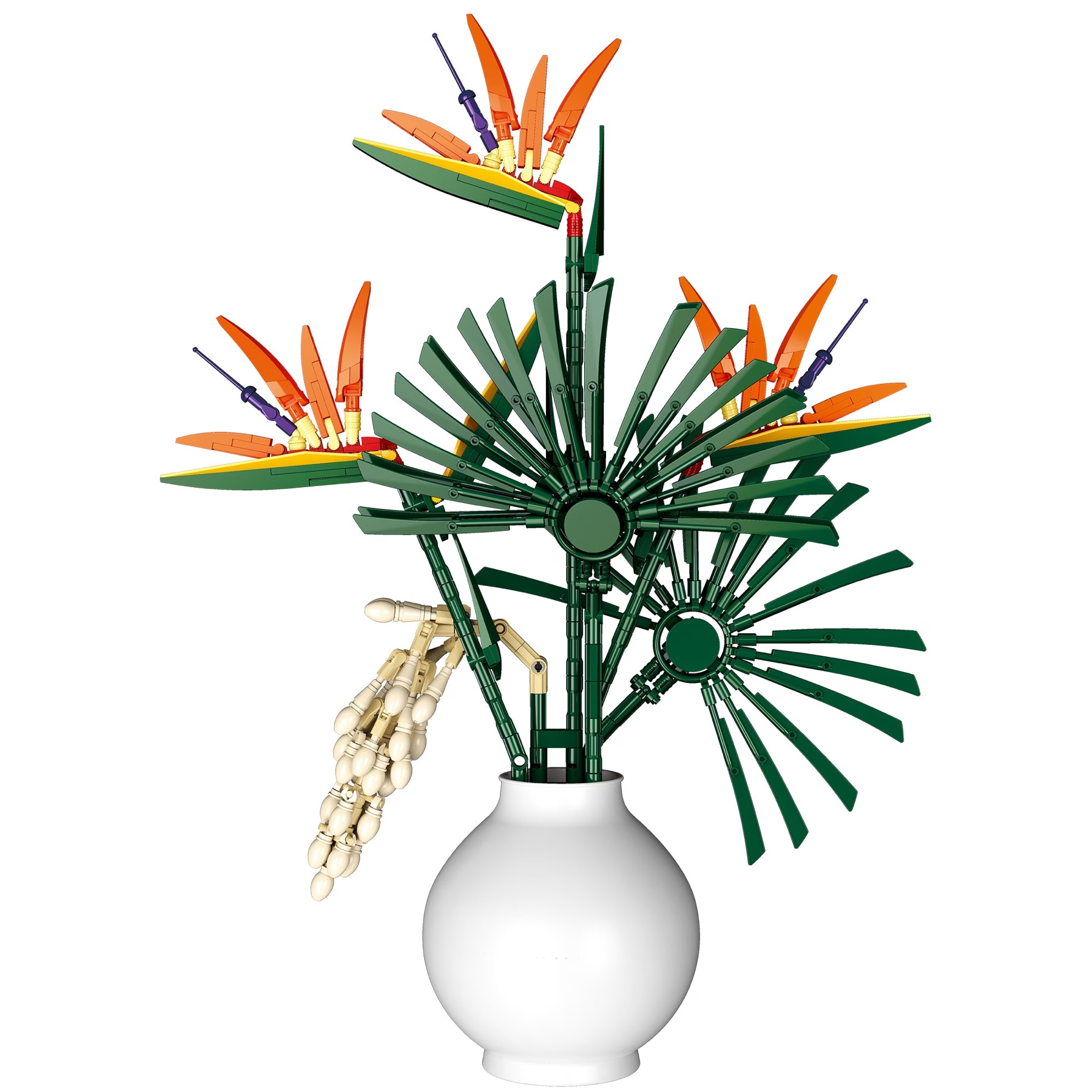
The JIESTAR Bird of Paradise Flower Arrangement, JJ9268 has 530 pieces. Its product image shows orange flowers and broad green leaves in a white vase. The current product specification lists a finished model size of 33.5 x 14.5 x 18.5 cm.
The JIESTAR Golden Moonflower Wall Decor, X88052 has 939 pieces and a listed finished model size of 27 x 7.5 x 36 cm. Its crescent-shaped floral composition offers a different presentation from the vase arrangement. For a wall-display plan, confirm the intended setup, supplied components and installation guidance during sample review.
These details were checked against the official product pages on October 19, 2026. They illustrate two selection directions, not a fixed bundle or an order recommendation. Confirm the specification of the version being quoted. Piece count is useful for identifying and comparing sets, but it does not establish assembly time, difficulty or a suitable retail price.
Build a SKU comparison sheet before discussing order quantities
Use the same fields for every shortlisted set so that the buyer, merchandising team and supplier are discussing the same product:
- SKU and exact product name, with a link to the current product page.
- Intended role in the assortment and the product feature to show customers.
- Finished model dimensions, with orientation confirmed from the sample.
- Retail package dimensions and the packaging version under discussion.
- Required listing images, product information and instruction language.
- Proposed quantity and any question that must be resolved before ordering.
The two examples also show why finished size and retail box size need separate fields. JJ9268 lists a 30 x 23 x 8 cm package; X88052 lists a 30 x 23.5 x 7.5 cm package. Similar box dimensions do not mean that the assembled models have the same shape or display requirements. Shipping-carton dimensions, gross weight and sets per carton still need separate confirmation for the proposed order.
Review the sample as a customer-facing product
Use a sample to check whether the intended presentation is practical. Assemble the model following the supplied instructions, record questions encountered during the build, and photograph it in the display position you plan to use. Compare the result with the product description and images intended for the listing.
For a vase arrangement, check how the flowers and leaves appear from the angles customers will see. For a wall-oriented composition, review the display method before preparing promotional photography. Keep the sample SKU, packaging version and review date beside the observations so that requested changes remain traceable.
Ask the supplier to confirm what is included and how product questions or missing-piece reports should be submitted. Use the replacement-parts support page as a starting point for that discussion. Record open questions separately from approved details before moving to the order stage.
Turn the shortlist into a wholesale inquiry
Send the selected SKUs with estimated quantities, destination, sales channel and packaging preferences. Include the comparison sheet and sample questions so the reply can address each product. Use the MOQ and quotation guide to prepare the commercial information needed for comparable offers.
If you plan a seasonal launch, provide your intended launch date and ask for a schedule based on the specific order. Confirm availability, MOQ, packaging and shipment terms in the quotation rather than assuming that a catalog listing settles them.
Start a wholesale flower building block inquiry for existing catalog sets. For branded packaging or a different product-development brief, use Custom Solutions and explain how the proposed change supports the assortment. After launch, retain SKU-level sales and customer-question records to inform the next selection and replenishment discussion.
Explore JIESTAR
Browse building block sets or contact JIESTAR for wholesale supply, OEM / ODM customization, product co-development, and sub-brand partnerships.
Continue reading
Related articles
Wholesale Tips
Wholesale Ship Building Block Sets: Display and Packaging Checklist
Oct 15, 2026 · 4 min read

Wholesale Tips
Building Block RFQ Checklist: What Buyers Should Prepare
Jul 10, 2026 · 5 min read
Wholesale Tips
How Amazon Sellers Can Source Building Block Sets from a Manufacturer
Jul 2, 2026 · 3 min read